Impact Entrepreneurship During the Polycrisis: An Interview with Laurie Lane-Zucker
The impact sector has proven that business can do good. But how can it make those impacts last: designing ownership, governance and capital to sustain the mission even when founders leave, companies are sold or markets shift? And how can it address the polycrisis that is putting communities, ecosystems and business models at increasing risk around the world?
Those are some of the questions at the heart of a new book, “The Impact Entrepreneur Breakthrough: A Field Manual for the Regenerative Economy,” by Laurie Lane-Zucker, the founder and CEO of Impact Entrepreneur, a global media platform and network with more than 70,000 members in over 200 countries.
In the interview below, he shares guidance from the book — and from his decades of work as a pioneering voice in the impact space — on how the sector can navigate the growing complexity of the global challenges it faces today.
1. After 15 years of running Impact Entrepreneur — on top of a noteworthy career working for social change — what made you decide to write this book, at this historical moment? What do you hope the book will accomplish?
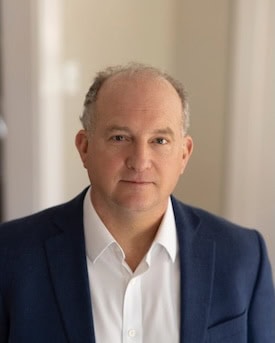
Laurie Lane-Zucker
Two things came together, one in the world and one in the field.
In the world, the crises stopped taking turns. A drought becomes a food crisis, then a displacement crisis, then a security crisis, and institutions designed to handle one emergency at a time keep arriving late to all of them. I’ve come to see these as symptoms of a single design failure, an economy organized around extraction. A failure with a common root can be redesigned, which is why this became a book about design.
In the field, the work had matured. When I coined the term “impact entrepreneur” in 2011, I was naming something that was just emerging. Fifteen years on, there are enough working models, tools and hard lessons to fill a field manual. Much of that knowledge was scattered, though. It lived in case studies and legal templates, and in the heads of founders who learned what a bad term sheet costs by signing one. Publishing their stories for many years showed me how often the same lessons were being learned twice. I wanted to gather them in one place.
What I hope the book accomplishes is a change in the first question people ask of an enterprise or a fund. Today that question is usually some version of “How much good does it do?” I’d like it to become “What keeps it doing good when the founder leaves, the capital changes hands or the market turns?” If that becomes a routine question in boardrooms, investment committees and classrooms, the book will have done its work. It’s being taught this fall at NYU Stern, Parsons School of Design, and Wesleyan, which is a good place to start.
2. You’ve framed the book as “a field manual for the regenerative economy”: What makes it a “field manual” — and if you had to distill its guidance for impact entrepreneurs into a couple of key pieces of advice, what would they be?
It’s built to be used, and used out of order, by people who are already in the field and have no time to read cover to cover. Each of the 16 chapters ends with a tool kit, a set of exercises a team can run on its own enterprise. We turned those into 18 printable canvases, 17 chapter canvases plus a cross-cutting Impact Diligence Canvas, and put them on our site for free. The same goes for an implementation roadmap that opens with a ten-minute diagnostic and then lays out ninety-day sprints for founders, investors, policy professionals and cultural workers.
If I had to distill the guidance into two pieces of advice, they would be these.
Put the mission in the structure. Values that live in a founder’s head leave with the founder. Values written into ownership, governance and capital terms stay put. Chapter 5 closes with the questions I’d put to any founder, anywhere, before a term sheet is signed. Who controls the board? Who benefits from the value created? Who bears the risk? And underneath all three, the question that decides the rest: Do our capital terms entrench power, or share it? WDI and Acumen’s Founders in Focus survey asks entrepreneurs what happened to them after they signed. These questions ask what they might have refused first.
See the system before you design for it, and then pull one lever all the way. Trace the problem back a few causes before building anything, and choose the cause your enterprise can actually change. When the whole book feels like too much, the roadmap offers the same advice I’d give in person: pick one tool kit and finish it.
3. In the book and your broader work, you distinguish between “impact entrepreneurship” and “social entrepreneurship.” If I can paraphrase your thinking, you view “social entrepreneurship” as something that aims to address the consequences of the world’s extractive economic systems, whereas “impact entrepreneurship” aims to redesign those systems to be regenerative rather than extractive. Can you provide an example of each approach that helps illustrate these different concepts?
Your paraphrase is close to how I’d put it. I’d add one refinement: the two often work on the same problem, and the difference shows up in the structure of what they build.
The book uses a simple pair. Two entrepreneurs see food insecurity in the same community. One opens a food bank. It depends on donations, hands out whatever food is available and succeeds by serving more people each year, while the causes of the hunger stay put. The other maps those causes, from low wages to a neighborhood with no grocery store, and starts a worker-owned grocery cooperative there. It buys from local regenerative farms, pays a living wage and is owned so that the community controls its access to food permanently. It succeeds as the community becomes more food sovereign. Both founders mean well, and both work hard. Only the second changes the conditions that created the need.
Microfinance holds both approaches in a single story. The book opens its first chapter with Grameen Bank because Grameen redesigned the whole architecture of lending, starting with ownership: the bank is owned largely by its borrowers. The group-lending method spread around the world. The ownership design spread far less. Where the product traveled without the ownership, some lenders drifted toward the very extraction microcredit was invented to answer, and borrowers bore the cost.
None of this diminishes social entrepreneurs. I was one, and many of the people who built that field went on to build this one. Most enterprises move along the spectrum over time, as mission shifts from a discretionary gesture to a structural commitment. The useful question to ask of any of them is which way they’re moving.
4. A similar distinction has emerged in impact investing, where the market seems to be segmenting itself into “impact-first” and “finance-first” investing, based on the investor’s willingness to prioritize impact over financial returns. Do these distinctions reveal a schism of sorts in the impact sector, where some are content operating within the traditional economic system and its typical practices, while others aim to build something fundamentally different? If so, do you view this as a positive or negative development?
The labels describe something real, an investor’s willingness to trade financial return for impact, and they help founders find the right money. I’d resist reading them as a schism, for two reasons.
The first is that the two kinds of capital need each other. Much of the most useful money in emerging markets arrives as a stack. Philanthropic or concessional capital takes the first loss, which makes the risk tolerable for commercial investors who would never have come in alone. That’s how blended finance works: impact-first and finance-first capital in the same deal, each doing the job it suits.
The second is that the return spectrum leaves out the variable I care about most. An impact-first investor can still demand board control, liquidation preferences and a fast exit, the terms that hollow out missions. A finance-first investor can earn a solid return from a steward-owned company whose voting rights stay in trust, protected from sale. The line I watch runs through the terms themselves: do they share power or entrench it? That’s the ground the Founders in Focus survey covers from the founder’s side of the table, and I’m eager to see what it finds.
Whether the segmentation is healthy depends on honesty. Clear labels help, because founders deserve to know what kind of money they’re taking. The trouble starts when “finance-first” becomes a way to keep the impact label while dropping the substance, and when the patient, risk-absorbing work is left to a small pool of concessional capital. The GIIN’s 2025 State of the Market found most of the impact assets it surveyed going to high-income regions. The places NextBillion’s readers work need more capital willing to sit at the bottom of the stack, and much less argument over which label is purer.
5. However you define it, it has become clear that the impact sector isn’t growing nearly as fast as the problems it aims to address. With rising inequality, an escalating climate crisis, democratic backsliding, ongoing geopolitical conflicts, and the economic and workforce disruptions of AI, among other worsening challenges, how much time do we realistically have to turn things around? If you were an investor or other funder with the appropriate sense of urgency, where would you focus your funding right now?
I’m wary of countdowns. Some thresholds won’t wait for us, in the climate above all, and I take them seriously. But a deadline tends to produce panic or paralysis, and neither one builds anything. What I’m sure of is that delay compounds. These crises feed one another, so every year spent reacting makes the next one more expensive.
That’s the logic behind what the book calls the Prevention Dividend™, the return on addressing causes before they become emergencies, and the evidence for it is strong. Ecosystem restoration returns $7 to $30 for every dollar invested. Early childhood education yields a 7 – 13% annual rate of return. Pandemic preparedness averts an estimated $1,102 in losses to the US economy for every dollar spent. Few investments in any portfolio or public budget perform like that, and few are so consistently underfunded.
With the right sense of urgency, I’d put money in four places. I’d start with prevention where exposure is highest: watersheds, mangroves and soils, community health workers, early childhood programs, early-warning systems. That is also where the money is thinnest. To take one example of this approach, African Risk Capacity, a specialized agency of the African Union, pools drought risk across member countries. When the rains fail, payouts arrive within weeks, early enough to act before families are forced to sell what they own.
Then I’d look at ownership. As founders retire and AI reshapes work, who owns productive assets will decide whether the gains spread or concentrate, and conversions to employee and community ownership deserve far more capital than they get.
Alongside them I’d back patient local lenders, meaning community lenders, savings cooperatives and the funds behind them, which can underwrite on relationships where an algorithm sees only risk.
Last, I’d focus on measurement that makes prevention visible to the people who set budgets. We built a public Prevention Ledger for that purpose, and it should be one tool among many.
6. What are your thoughts on the performance of the impact sector’s leaders over the past few years: Do you think they’ve met the moment? If not, what would you like to see these leaders do differently — and what can the rest of us do if we see our own leaders straying from the missions or principles we thought we were working toward?
Partly. The last decade produced real infrastructure: more than ten thousand Certified B Corps, benefit corporation laws in most US states and in countries from Italy to Colombia, shared standards for measuring impact, and a generation of funds with impact written into their mandates. People built those things against resistance, and I don’t want to wave them away.
Where leadership fell short, in my view, was on durability. We got very good at measuring what enterprises do and paid far less attention to who controls them, or to what happens to a mission when a company is sold or a fund needs its exit. And too many recent commitments took the form of pledges. A pledge costs little to make and less to drop, and when the mood around them shifted, a good many were dropped.
What I’d ask of leaders is easy to say and hard to do: Write commitments down where they bind. Put them in the bylaws, the partnership agreement and the ownership structure. We try to hold ourselves to that at Impact Entrepreneur. We’re a public benefit corporation, and our founding documents give a golden share veto power over mission-related decisions.
Everyone else has more say than they use. Employees, members, limited partners, grantees and customers can all ask structural questions out loud. What happens to the mission if this company is sold? Who sits on the investment committee? Does the endowment invest in line with the grants? Ask before a crisis, while the answer can still change something. And when a leader you trusted starts to drift, look at the structure before you look at the person, because drift usually starts where the design left room for it.
7. As the proprietor of one of the pioneering impact media publications, how do you view the role of media in perpetuating, and perhaps addressing, the global polycrisis? What should impact media publications be doing differently to respond to these overlapping challenges? Should impact sector funders be playing a larger role in supporting impact media — or even building or buying mainstream media outlets to help amplify the sector’s key messaging and mobilize public opinion around these issues?
I should declare an interest, since I run one of these publications.
Media shapes the polycrisis in two ways. One is the business model. Much of the attention economy earns more from outrage than from understanding, and its algorithms reward the story that inflames over the one that explains. The book treats attention as a commons, the shared cognitive infrastructure a society needs to deliberate and act, and it treats the erosion of that commons as a security problem. The other is form. News is organized around events, so crises get covered one at a time, and the successes of prevention, which are non-events by design, rarely get covered at all.
Impact media can do better on both counts. We can report on structure as seriously as we report on founders: ownership, terms, governance, and what became of the mission five years after the celebrated launch. We can be as skeptical of our own sector as of anyone else’s, because impact-washing does this field more damage than any critic. And we can build business models that reward depth, where readers pay for fewer, better stories.
Funders should play a larger role, provided they fund independence. Multi-year general operating support, with a clear wall between the money and editorial decisions, is worth more than any campaign grant. Media literacy deserves support too. Finland built it into its national curriculum from primary school through university, and it has held or shared first place in every edition of Europe’s Media Literacy Index.
I’d be much more careful about buying outlets to amplify the sector’s messaging. An outlet bought to carry a message loses the trust that made it worth buying. If funders want to own media, the book’s argument about ownership applies: Use structures that protect independence. The Guardian has been owned since 1936 by the Scott Trust, which was created to shield the paper from interference by future owners. That’s a form of media ownership I’d be glad to see funders copy.
James Militzer is the managing editor of NextBillion.
Main photo credit: ismagilov
Photo of Laurie Lane-Zucker: Christina Rahr Lane
You May Also Be Interested In:



- Categories
- Social Enterprise