-
AI Risk Management in Digital Finance: Protecting Africa’s Underbanked from Invisible Threats
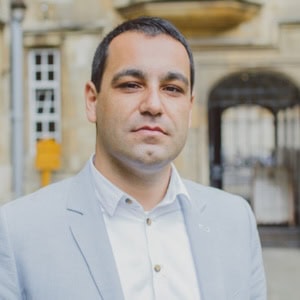
Digital finance has been a game-changer for financial inclusion across Africa. But as information technology security analyst Nathaniel Adeniyi Akande explains, many communities remain excluded — and though AI-powered lending tools offer new opportunities to reach them, these tools also introduce new risks that can undermine trust or even exclude the people they are designed to serve. He argues that it is digital lenders’ responsibility to anticipate and mitigate these threats, and explores several practices that are essential to AI risk management in the sector. NOTE: In celebration of our 20th anniversary, NextBillion is highlighting key guest articles from our two decades online. We’re currently focusing on the healthcare sector: You can read these featured articles below.
- Categories
- Finance, Technology
-
The World is Losing the Fight Against Malaria: Could Drones and AI Help Defeat the Disease Once and For All?
The fight against malaria has been one of the great global health success stories of the 21st century, as efforts to defeat the disease have prevented an estimated 2.2 billion malaria cases and saved 12.7 million lives. But as Yosuke Kaneko at SORA Technology explains, this progress has stalled in recent years — and as global development funding dries up, there are worrying signs that the problem could get worse. He argues that this situation calls for an openness to new, tech-driven solutions, and explores how SORA Technology is using drones equipped with AI-powered cameras to target mosquito breeding sites and eradicate the disease at its source.
- Categories
- Health Care, Technology
-
NextBillion at 20: Reflecting on Growth, Change and Global Impact
NextBillion is celebrating its 20th anniversary this year, at a time of immense global change and uncertainty. But a few things haven’t changed: Entrepreneurship continues to be a key factor in solving the world’s most urgent challenges. Investments in emerging markets continue to catalyze innovation. And access to accurate sources of information remains essential to unlocking business growth and impact. NextBillion is currently spotlighting guest articles that captured some of the key conversations and challenges that have shaped impact-focused business in emerging markets over the past two decades — and that continue to shape these sectors today. We're featuring the environment sector this week: Check out these insights below.
- Categories
- Social Enterprise
-
Financing Off-Grid Solar: A Pioneering Provider in Honduras Shows the Impact of Diversified Funding
Honduras is one of the poorest countries in Latin America and the Caribbean, and many of its most remote regions remain unserved by the electricity grid. Richenda Van Leeuwen at Hummingbird Green Solutions and Richard Stuebi and Jesse Colman at Boston University explore how Soluz Honduras is bringing freezers and other solar products to these markets by leveraging a variety of different financing models — an approach that shows how diversified funding can enable businesses to serve even the hardest-to-reach areas and the poorest of customers.
-
Entrepreneur-Friendly Inclusive Finance: A Survey of Brazilian MSMEs Highlights Key Lessons for Lenders
In Brazil, impact-focused lenders like Estímulo are successfully reaching small and medium-sized enterprises (MSMEs) with inclusive lending approaches. But as Carla Grados-Villamar at 60 Decibels and Lucas Conrado at Estímulo explain, inclusive finance is not just about disbursing loans — it’s about understanding entrepreneurs’ realities and adapting accordingly. They share findings from 60 Decibels' interviews with over 400 Estímulo loan applicants, highlighting lessons lenders can use to improve business outcomes for borrowers, and prepare non-borrowers for future credit opportunities.
- Categories
- Finance
-
Africa Needs Jobs — the Agri-Food Industry Can Provide Them: How the Sector Can Boost its Impact on Employment Across the Continent
Sub-Saharan Africa’s working-age population is projected to increase by more than 20 million per year until 2050. Yet according to Loïc De Cannière at Incofin Investment Management, the region created "only" 9 million jobs per year on average during the first two decades of this century. He argues that if job growth can't keep pace with this growing demographic, unemployment will likely lead to more poverty, societal unrest and migratory pressures. The solution, he explains, is to support the industries with the biggest potential for job creation, starting with the agri-food sector.
- Categories
- Agriculture, Investing
-
Public Good vs. Profitable Exits: Why Public Innovation Agencies Must Stop Copying Venture Capital
A new class of venture capitalist is emerging, but they aren’t Wall Street financiers or Silicon Valley tech bros. As Emre Eren Korkmaz at the University of Oxford argues, they are public innovation agencies that are shifting their funding approach: Instead of supporting high-risk research and innovations aimed at delivering societal benefit, they have begun to adopt the logic of venture capital, favoring commercially viable projects that are more likely to secure follow-on private funding. He explores the downsides to this shift, arguing that the world needs these institutions to do what private capital cannot or will not: supporting innovation for the public good, not just for profitable exits.
- Categories
- Investing, Social Enterprise, Technology
-
From Energy Access to Economic Empowerment: Workable Models for Financing a Just Transition in Emerging Markets
Today 2.1 billion people live without clean cooking fuels and technologies, and over 660 million people lack electricity access. Yet as Anthony Osijo at Bboxx points out, as global conversations largely focus on decarbonizing energy resources to combat climate change, these millions of households still cannot access essential products and services the rest of the world takes for granted. He argues that emerging markets can't simply be left in the dark because their kerosene lamps and diesel generators aren’t environmentally viable, especially if they lack access to suitable alternatives. He explores ways to finance and deliver a just climate transition — while also eradicating energy poverty.
- Categories
- Energy, Environment