When Competitors Collaborate: How Eight Impact-First Investors Came Together to Confront the Valley of Death
Decades of working in development finance have shown me that the hardest problems often hide in plain sight. The “Valley of Death” continues to be one of them.
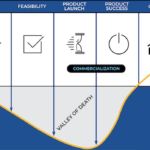
The Valley of Death describes the persistent gap between early-stage capital and the type of scale-ready financing that social enterprises need to grow. It is where promising ventures stall: not because their impact is lacking, but because the capital available to them is not fit-for-purpose.
We all talk about it, but we rarely slow down enough to unpack why it persists, and what role each of us can play in closing it.
Choosing Collaboration Over Comfort
That’s why it is so encouraging that eight organizations — Acumen, Global Partnerships, Halcyon, Kiva, MCE Social Capital, Miller Center for Global Impact, Open Road Impact, and Village Capital — made a deliberate choice last year to step out of their silos and participate in an unusually open and trusting collaborative study, to better understand why the Valley of Death persists.
This type of research is rare. The organizations involved in this collaboration are peers and, in many ways, competitors. We often compete on the fundraising side. On the funding side, we’re seeking to invest in some of the same entrepreneurs. All of us operate under scrutiny from donors who want efficiency, scale and measurable outcomes. That made this collaboration inherently uncomfortable — and also necessary.
“We picked the hard path,” shared Caroline Bressan, CEO of Open Road Impact, at a recent webinar covering the project. “Weighing the trade-offs between financial return, impact and risk, on a daily basis, is heavy.” As Bressan told the virtual room of over 300 attendees, we made this uncomfortable leap in order “to build more of a community among impact-first investors and step into the unknown together in pursuit of shared learning.”
Making the Invisible Visible
From the outset, the group recognized that we are all facing the same economic struggle to resource ourselves while providing entrepreneur-centric, impact-first capital. The question was whether that shared struggle stems from the same underlying causes. To begin addressing that question, we needed to establish a common baseline — and that required data.
Daniel Waldron, Director of Insights at Acumen, another contributor to the study, explained the value of taking a data-centric approach: “You should never underestimate the importance of quantifying a problem, even if each of us felt we had a fairly good understanding of it. The data makes a case that anecdotes cannot. And I think if we’re proposing big solutions down the road, they need to be built on a firm foundation.”
The eight participating organizations agreed to focus the lens inward, contributing individual fund data to better understand the true cost of their impact-first models. As far as the group knew, no one had ever attempted a comprehensive cost analysis across multiple impact-first funds — i.e., funds that prioritize impact over financial returns. We agreed that the data would be anonymized and that any findings would be developed and approved by consensus among the contributors. No one organization could be identified or compared to another. Nor could anyone claim sole ownership of the shared findings.
The trust within the group made it possible to surface and compare highly sensitive operational and cost information that is rarely provided across potential competitors. For Amy Bell, Chief Financial Officer of MCE Social Capital, one of the eight participating organizations, that trust was foundational: “The partners in this group feel a deep alignment with each other, as we share a relentless commitment to centering impact. As such, we are glad to speak candidly about costs because we trust that collaboration and sharing insights will help us all become more successful, which only serves to further the positive impact we have collectively on the world.”
What We Learned About the True Cost of Impact-First Investing
We also named our work together, choosing to title the study “The True Cost of Impact-First Investing” because we wanted to lift the hood and see what it actually takes to run impact-first funds. Our hypothesis was that the Valley of Death persists because the funds that aim to close the gap are themselves underfunded, and impact-first funds are capitalized and judged against market-rate vehicles that operate using different underlying economics. If we could use the power of numbers to illustrate the true cost of impact-first investing, we could make the case that paying for this cost is one of the highest-leverage uses of philanthropic capital out there.
Our early findings, shared with a standing-room-only audience at SOCAP 2025, reframed a common conversation in the industry. Contrary to long-standing assumptions, the impact-first funds in the study matched or outperformed mainstream commercial fund benchmarks in operational efficiency on a cost-per-investment basis. This result suggests that impact-first investors are just as rigorous in our financial practices and underwriting as mainstream financial providers, and that “impact-first” is not code for lacking rigor.
However, the findings also revealed an area where the fund economics diverge on traditional efficiency metrics: cost per dollar deployed. This metric assesses how many cents it costs a fund to move $1 of capital. In our study, impact-first funds exhibited a cost per dollar deployed that was 2-3 times higher than the mainstream commercial fund benchmarks.
Does that mean impact-first funds are inefficient? No — on a per-investment basis, we already demonstrated their comparability. So what is that extra cost paying for?
Impact-first funds make smaller investments and provide more hands-on support, so each dollar carries a higher portion of fixed costs. Commercial funds deploy larger amounts per deal and spread those same costs across more capital, while offering less additional support to investees. This extra cost is fundamental to the impact-first investing model, not an inefficiency that we should optimize away. I believe it represents the true cost of closing the Valley of Death.
For philanthropic funders, resourcing impact-first funds therefore becomes a powerful point of leverage. By helping these funds do more, they can extend their impact far beyond what direct giving alone can achieve — providing fit-for-purpose capital that helps social enterprises cross the Valley of Death to grow and thrive.
Co-Creating What Comes Next
These insights are the result of eight organizations with 170 years of combined institutional experience taking a leap of faith together. And we are just getting started.
For Waldron, the process of working through the analysis collectively was almost as valuable as the results. “It was wonderful to hear such a brilliant group of people wrestle not just with the fundamental economics of our work, but also how we need to position those fundamentals to the outside world. Going through a difficult process together builds fellowship, and that is an invaluable thing to have when you’re trying to change the status quo.”
This year, the founding group is expanding to include additional funds and partners, with the goal of building a shared, practitioner-led research infrastructure that can inform how capital is deployed. We hope this marks the beginning of a coalition built not on top-down, one-off reporting, but rather through a horizontal, evolving, practitioner-driven movement toward radical transparency and collaboration across a sector that has long needed both.
Brigit Helms is the Executive Director of Miller Center for Global Impact.
Photo: imtmphoto


- Categories
- Investing, Social Enterprise
- Tags
- impact investing, research